Скрытые расходы на большой сад: Стоимость услуг садовника против покупки оборудования in 2024: what's changed and what works
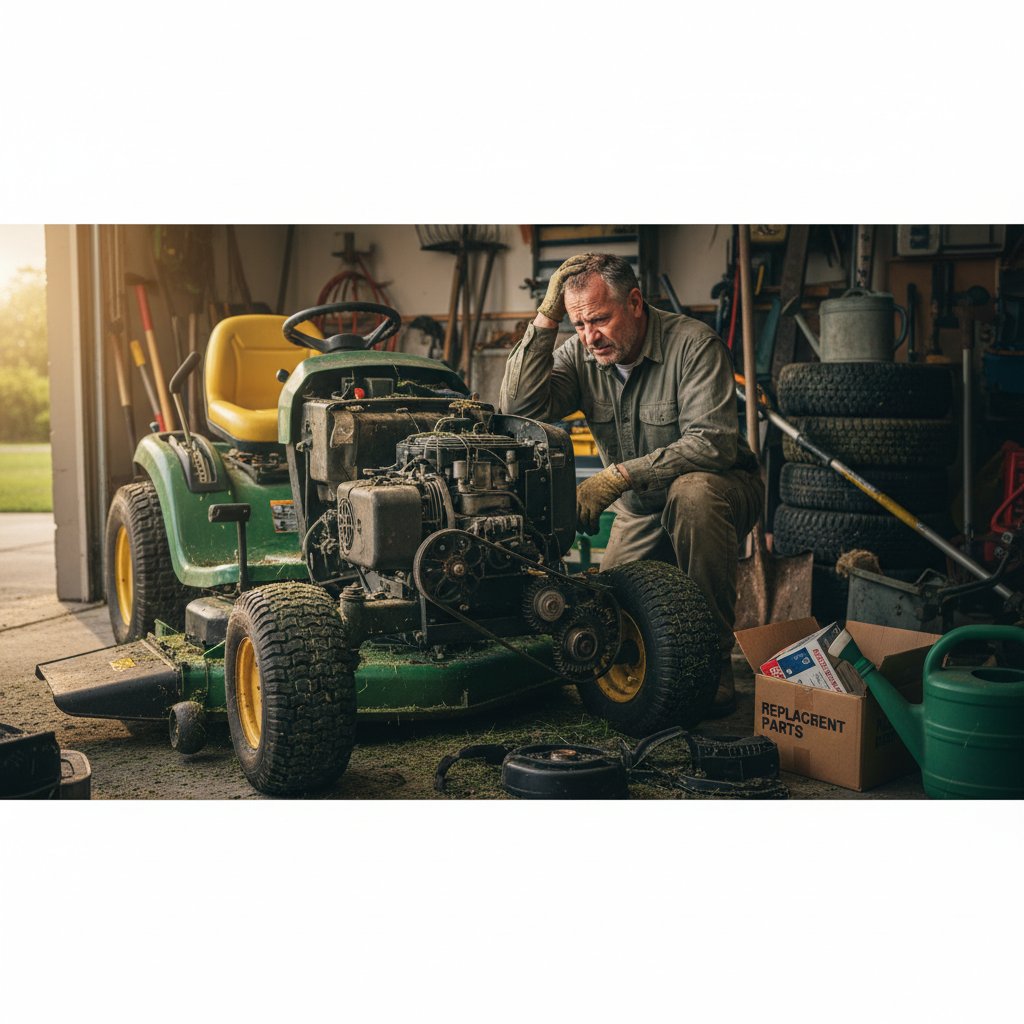
Last spring, I watched my neighbor drop $4,200 on a riding mower he's used exactly seven times. Meanwhile, his buddy across the street pays a lawn service $180 monthly and hasn't touched a blade of grass in three years. Both think they're making the smart financial call. Spoiler: they're probably both bleeding money in ways they haven't even noticed.
Managing a large property means navigating a minefield of expenses that don't show up in the initial budget. The debate between hiring professionals versus buying equipment has gotten more complex in 2024, with supply chain adjustments, labor market shifts, and some genuinely surprising cost revelations that flip conventional wisdom on its head.
The Real Numbers Behind Garden Management in 2024
1. Equipment Depreciation Hits Different Than You Think
That shiny new zero-turn mower loses 30-40% of its value the moment you fire it up for the first time. A $5,000 commercial-grade machine drops to $3,000 in resale value within twelve months, regardless of how pristine you keep it. Manufacturers have flooded the market with updated models every 18 months, making previous versions feel ancient faster than ever.
The depreciation curve gets steeper with specialized equipment. A professional-grade hedge trimmer at $600 becomes worth maybe $250 after one season. String trimmers, blowers, and edgers follow similar patterns. If you're calculating equipment costs, factor in that you're essentially renting these tools at a 35% annual rate through value loss alone.
Here's what nobody mentions: storage infrastructure. You need a shed ($2,000-$8,000), proper ventilation to prevent fuel vapor buildup, and potentially electrical work for battery charging stations. One reader told me he spent $3,400 building adequate storage before realizing his "savings" from buying equipment had evaporated.
2. Maintenance Costs Stack Up Like Compound Interest
Blade sharpening runs $15-$30 per session, and you'll need it 4-6 times per season for optimal performance. Oil changes, air filters, spark plugs, and fuel stabilizers add another $200 annually per gas-powered machine. Battery-powered equipment seems cheaper until you hit year three and face $400-$900 battery replacements.
Winter storage prep costs money too. Fuel system treatment, battery maintenance, and proper winterization prevent spring disasters but add $75-$150 per machine annually. Skip it, and you're looking at repair bills that average $300-$600 when equipment won't start in April. Professional services don't have these seasonal headaches—they just show up when the grass grows.
3. Your Time Has a Dollar Value (Whether You Count It or Not)
A two-acre property takes 3-4 hours to mow properly. Add trimming, edging, and blowing, and you're at 5-6 hours weekly during peak season. At 26 weeks per growing season, that's 130-156 hours annually. Even if you value your weekend time at just $25/hour, you're looking at $3,250-$3,900 in opportunity cost.
The math shifts dramatically if you're pulling weekend hours away from family time or side projects that could generate income. One landscaping forum member calculated he was "saving" $2,400 annually doing his own yard work while losing $8,000 in freelance opportunities he couldn't take because his Saturdays were booked.
4. Professional Services Include Hidden Value Most People Miss
Lawn services bring commercial-grade equipment that costs $15,000-$40,000. They spread that investment across 50-100 clients, meaning you access top-tier machinery for a fraction of ownership costs. Their commercial mowers cut cleaner, their aerators penetrate deeper, and their overseeders distribute more evenly than homeowner-grade alternatives.
Insurance and liability coverage comes standard. When your nephew runs over a sprinkler head with your mower, you're eating a $400 repair. When a lawn service does it, their insurance handles it. They also carry workers' comp, which matters more than you'd think—homeowner policies often don't cover injuries to people you've hired informally.
Seasonal flexibility is underrated. Take a three-week vacation and your yard doesn't become a jungle. Break your ankle in June and the grass still gets cut. These scenarios happen more often than people plan for, and they completely derail the DIY cost-benefit analysis.
5. The Equipment Graveyard in Your Garage Tells the Truth
Most homeowners own 2-3 pieces of garden equipment they haven't used in over a year. That $400 power washer you bought for the deck? Used twice. The $350 leaf vacuum that seemed essential? Your blower does the job fine. These impulse purchases add up to $1,200-$2,500 sitting idle in the average large-property owner's storage.
Specialty tools for seasonal tasks make the problem worse. A dethatching rake for $180, an aerator rental at $90 per use, and a slice seeder you'll touch once every three years. Professional services include these specialized treatments in seasonal packages, eliminating the need to own or rent single-use equipment.
6. Fuel and Consumables Create Death by a Thousand Cuts
Gas prices in 2024 have stabilized around $3.50-$4.50 per gallon, but large properties burn through fuel fast. A riding mower consumes 1-2 gallons per mowing session. Add string trimmers, blowers, and other equipment, and you're spending $40-$60 monthly on fuel alone during peak season. That's $240-$360 annually before counting oil, filters, and two-stroke mix.
String trimmer line, mower belts, and replacement parts seem cheap individually but compound quickly. Budget $150-$250 annually for these consumables. Professional services buy in bulk and spread costs across their client base, achieving economies of scale you can't match.
7. Skill Development Has a Learning Curve (and a Cost)
Proper mowing patterns, correct cutting heights for different seasons, and knowing when to aerate versus overseed takes years to master. Most homeowners learn through expensive mistakes—scalping the lawn in August, cutting too short before winter, or aerating at the wrong time and promoting weed growth instead of grass density.
These errors cost money to fix. Reseeding a damaged lawn section runs $300-$800. Correcting soil compaction problems can hit $500-$1,200. Professional crews bring institutional knowledge that prevents these costly mistakes in the first place. They've already made these errors on someone else's property and learned from them.
Where the Math Actually Lands
A professional service for a large property (1-2 acres) typically runs $2,400-$4,800 annually depending on your region and service level. Equipment ownership for the same property costs $3,000-$5,000 in year one, then $1,200-$2,200 annually after that—but only if you ignore time value, depreciation, and opportunity costs.
The breakeven analysis isn't straightforward anymore. If you genuinely enjoy yard work, find it meditative, and have time to spare, equipment ownership makes sense. You'll spend more but gain satisfaction and exercise. If you're doing it purely for cost savings, run the actual numbers including all hidden expenses. You might discover you're working a second job at below minimum wage.
The smartest approach? Hybrid models are gaining popularity. Handle weekly mowing yourself with quality equipment, but hire professionals for specialized seasonal work like aeration, overseeding, and major cleanups. This splits the difference, giving you control while accessing expertise for complex tasks that require expensive single-use equipment.